The short answer
A content flywheel turns one strategic brief into native content for every touchpoint a buyer meets: social video, AI answers, community threads, email and the landing page. The questions buyers ask feed the next brief. With AI Overviews now on 43% of Google searches and clicks to the top result down sharply when they appear, brands need to be present across the whole journey and measure it as one, using data-driven attribution rather than last click.
Key takeaways
- Google users click a traditional result in 8% of visits when an AI summary appears, compared with 15% without one (Pew Research Center).
- In a year, AI Overviews went from appearing on 15% of Google searches to 43% (Similarweb via TechCrunch, July 2026).
- Reddit appears in Google's top 10 for 37% of queries and YouTube for 19.8% (SE Ranking).
- A flywheel rebuilds one brief for each of five touchpoints: discover, research, validate, return and act.
- Data-driven attribution is the GA4 default. Last click hides the touchpoints that create demand.
What is a content flywheel?
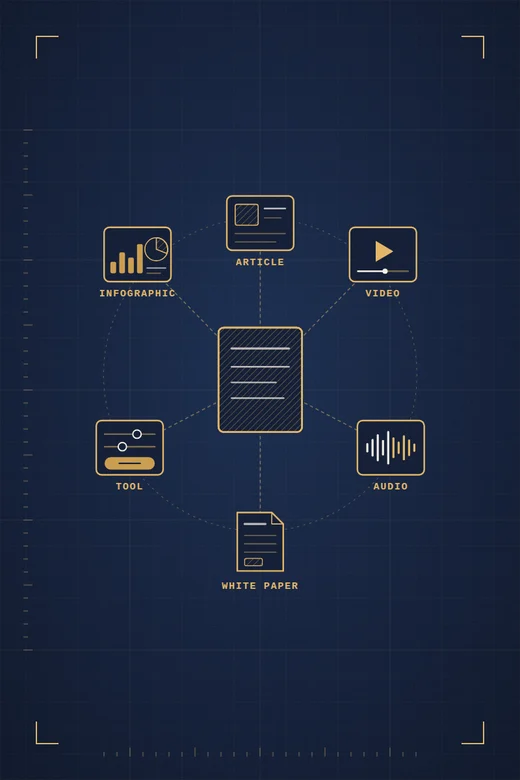
A content flywheel is a system where one strategic brief is turned into native content for every touchpoint a buyer meets, and the questions buyers ask along the way feed the next brief. Instead of a campaign that stops when the budget runs out, each round of content makes the next one cheaper to plan and more likely to land, because it is built from real demand.
The idea matters now because the path to a purchase has spread out. Buyers meet a brand in an AI answer, a short video, a Reddit thread and a newsletter long before they click a call to action. A flywheel makes sure the same story is waiting for them at each stop, told in the format that stop rewards.
Why has the buyer journey changed?
Three shifts have moved attention away from the classic search results page.
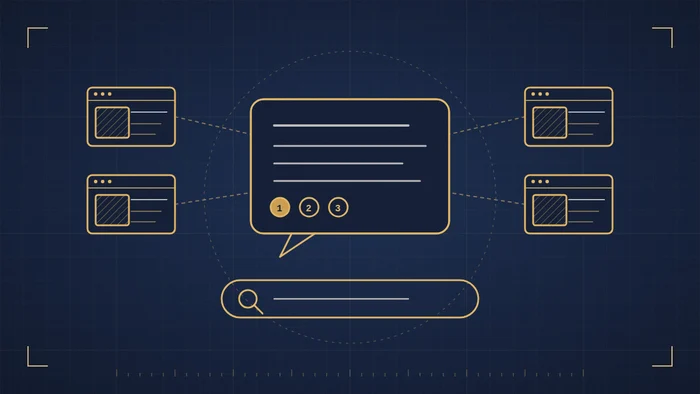
- AI answers take the click. In Pew Research Center's analysis of real browsing data, Google users clicked a traditional result in 8% of visits when an AI summary appeared, compared with 15% when it did not. Ahrefs found that AI Overviews reduce clicks to the top-ranking page by 58%, based on 300,000 keywords and December 2025 data.
- AI answers are becoming the default. Similarweb data reported by TechCrunch shows AI Overviews appearing on 43% of Google searches, up from 15% a year earlier. Similarweb also reports AI platforms sending an average of 770.7 million referral visits a month between June 2025 and May 2026, up 117.4%.
- Communities and video rank at the top. SE Ranking's study of 63,987 sites found Reddit in Google's top 10 for 37% of queries and YouTube for 19.8%. After the May 2026 core update, SE Ranking measured Reddit holding 10.24% of all top three positions.
Search behaviour has spread across platforms too. Adobe Express research found that 49% of US consumers have used TikTok as a search engine. The result is a journey with more stops, fewer clicks and more decisions made before anyone reaches a website.
What are the five touchpoints in a modern buyer journey?
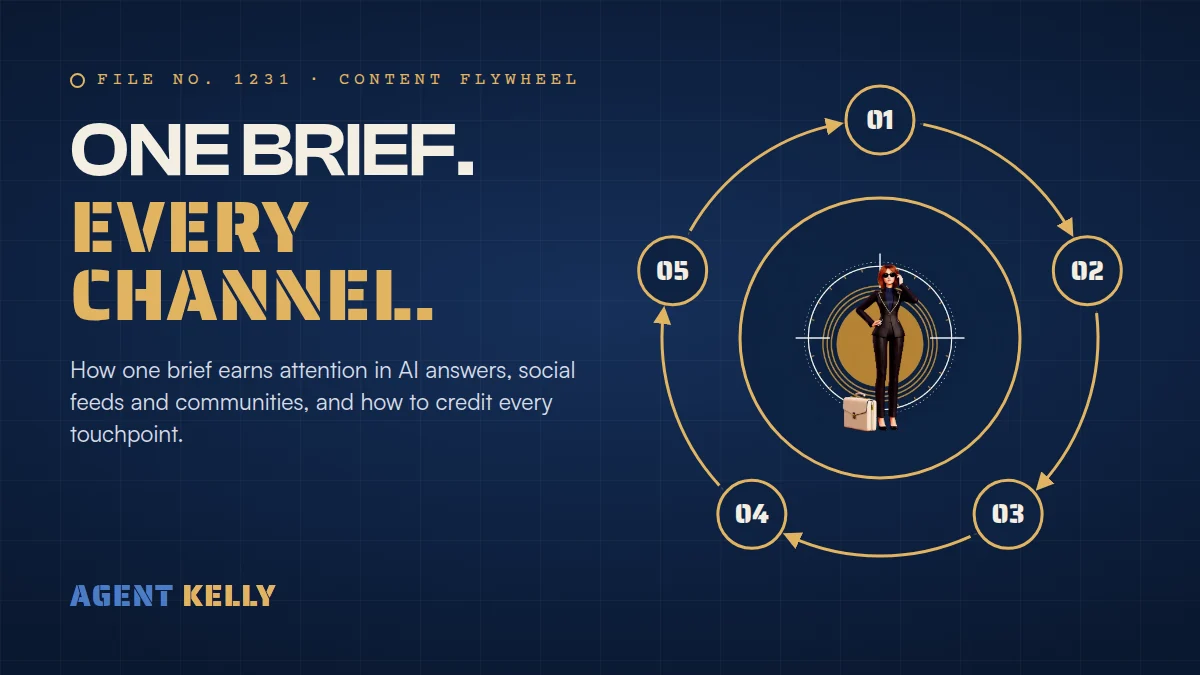
We map every flywheel to five stages. Each has a different job, a different set of channels and a different way to measure progress.
| Stage | What the buyer does | Typical channels | What we measure |
|---|---|---|---|
| 01 Discover | Sees a clip or post in the feed | TikTok, Instagram, YouTube, LinkedIn | Saves, shares and search-driven views |
| 02 Research | Asks Google or an AI assistant | AI Overviews, ChatGPT, Perplexity | AI citations and share of answer |
| 03 Validate | Checks what real people say | Reddit, YouTube, Discord, Telegram | Brand mentions in threads and replies |
| 04 Return | Comes back for more detail | Blog, newsletter, retargeting | Returning visitors and engaged subscribers |
| 05 Act | Searches the brand and converts | Branded search, landing page | Conversions credited across the full path |
How does one brief feed every channel?
The brief is the engine. It sets out the audience, the problem, the evidence and the one idea the brand wants remembered. From there, each touchpoint gets its own version, rebuilt rather than reposted.
- Start from real questions. Pull the questions buyers already ask from search data, sales calls, support tickets, reviews and community threads.
- Write the answer first. Lead with a direct, quotable answer, then back it with named expertise, data and sources. Clear answers are what AI systems lift into summaries.
- Rebuild for each format. One brief becomes a 30-second vertical video, a LinkedIn carousel, an X thread and a long-form article, each captioned and titled for search on its own platform.
- Seed the conversation. Take part in Reddit, Discord or Telegram with genuine answers, not links. Semrush's analysis of Reddit citations in AI search found that Q&A threads make up more than half of cited posts, and 80% of cited posts have fewer than 20 upvotes. Helpful answers matter more than popularity.
- Bring people back. Turn the objections people raise into the next blog post, newsletter or retargeting message.
- Feed the next brief. Every question that comes back in comments, threads and sales calls becomes input for the next round. That loop is what makes it a flywheel.
Who gets the credit when someone converts?
Attribution decides which touchpoints get the credit when someone finally acts. The model you choose changes which channels look valuable, and so where budget goes.
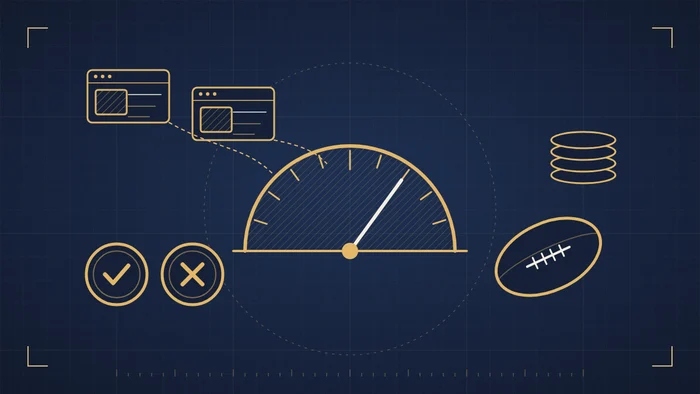
Google Analytics 4 now offers three attribution models: data-driven, which is the default, paid and organic last click, and Google paid channels last click. According to Google Analytics Help, first click, linear, time decay and position-based models were removed in November 2023, a change Google Ads Help also documents.
- Last click gives all the credit to the final interaction. It is simple, but the steps that built the case score zero.
- Position based gave 40% to the first touch, 40% to the last and shared the remaining 20% across the middle, as Search Engine Land explains. It is more balanced, but the split is a fixed rule rather than evidence.
- Data driven has no fixed rule. Google says it evaluates both converting and non-converting paths, then gives more credit to the touchpoints that made the difference in your own account.
How does attribution work in a worked example?
Here is an example month: 7,750 buyer journeys and 185 conversions across five paths.
| Path | Journeys | Conversions | Conversion rate |
|---|---|---|---|
| Brand search only | 4,000 | 40 | 1.0% |
| AI answer, then brand search | 2,000 | 50 | 2.5% |
| AI answer, Reddit, brand search | 1,000 | 45 | 4.5% |
| Video, AI answer, Reddit, brand search | 500 | 30 | 6.0% |
| Video, AI answer, Reddit, email, brand search | 250 | 20 | 8.0% |
Compare paths that differ by one step and the pattern is clear. Brand search alone converts at 1.0%. Adding an AI answer lifts it to 2.5%, adding Reddit to 4.5%, adding video to 6.0% and adding email to 8.0%. That lift is the kind of evidence data-driven attribution looks for.
Now score the same 185 conversions three ways. In the data-driven column, each path's conversions are shared in proportion to the lift each touchpoint adds.
| Touchpoint | Last click | Position based | Data driven |
|---|---|---|---|
| Video | 0 | 20 | 11 |
| AI answer | 0 | 47 | 56 |
| 0 | 13 | 35 | |
| 0 | 1 | 5 | |
| Brand search | 185 | 103 | 78 |
Under last click, Reddit gets nothing and looks like a channel to cut. Measured by lift, it earns 35 conversions. Brand search drops from 185 to 78: it closes the journey, but more than half the credit belongs to what came before. GA4's own model uses far more paths and machine learning, but the principle is the same: compare journeys with and without each touchpoint.

Where do content flywheels break?
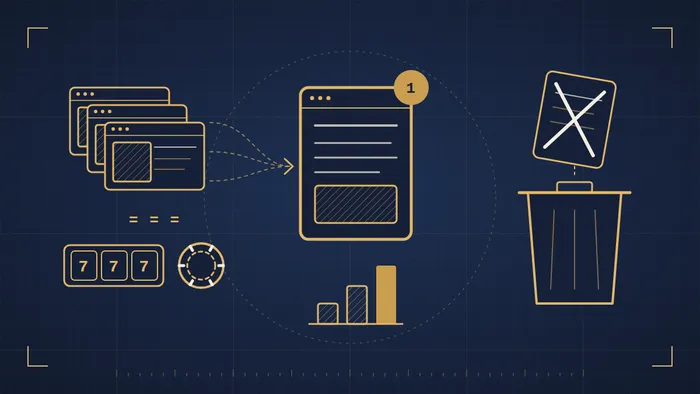
- Copy and paste. The same post on every platform. Each touchpoint has its own format, language and job, and audiences notice when content was not made for them.
- Missing in the middle. Strong ads and a strong website, but nothing in the AI answers, threads and reviews buyers check in between. That is where trust is won or lost.
- Last click reporting. Budgets move to whatever sat nearest the sale, and the touchpoints that created the demand get cut. The flywheel slows down a quarter or two later.
How do you measure a content flywheel?
- Use data-driven attribution in GA4 as the baseline, with enough conversions and clean, consented tracking for the model to learn from.
- Track a leading signal at every touchpoint, so early stages show progress before the sale: saves and shares, AI citations, brand mentions, returning visitors and subscriber engagement.
- Judge each channel on its role in the journey, not only on the last click. A channel that rarely closes may still be the one that starts most journeys.
- Review the questions coming back, and turn them into the next brief.
Questions people ask
What is a content flywheel in marketing?
A content flywheel is a system where one strategic brief is turned into native content for every touchpoint a buyer meets, such as short video, AI answers, community threads, email and landing pages. The questions buyers raise along the way feed the next brief, so each round builds on real demand instead of starting from scratch.
How is a content flywheel different from a marketing funnel?
A funnel treats the journey as a one-way line that ends at the sale. A flywheel treats it as a loop: what buyers ask, share and object to after each touchpoint is fed back into the next brief, so momentum builds over time rather than resetting with each campaign.
Which attribution models are available in GA4?
Google Analytics 4 offers data-driven attribution, which is the default, plus paid and organic last click and Google paid channels last click. First click, linear, time decay and position-based models were removed in November 2023.
Why is last click attribution misleading?
Last click gives all the credit to the final interaction, usually branded search or a direct visit. The video, AI answer, community thread or email that built the case scores zero, so budgets drift towards whatever sat nearest the sale and the touchpoints that created the demand get cut.
How do you get content cited in AI answers?
Lead with a direct, quotable answer to a real question, then support it with named expertise, data and cited sources. Make sure pages are indexed and eligible for snippets, and be present in the communities, such as Reddit and YouTube, that AI systems and searchers already draw on.
How long does a content flywheel take to work?
It depends on the market, the starting audience and how often the brief is refreshed. Leading signals such as saves, shares, AI citations and community mentions usually move first, before the effect shows in conversions, which is why we track a signal at every touchpoint rather than waiting for sales data alone.
Sources
- Google users are less likely to click on links when an AI summary appears in the resultspewresearch.org
- Update: AI Overviews reduce clicks by 58%ahrefs.com
- Google's AI search is rapidly becoming the default, new data showstechcrunch.com
- AI referral traffic by industry: 2026 dataaisearch.similarweb.com
- Social media traffic research studyseranking.com
- Google May 2026 core update analysisseranking.com
- Using TikTok as a search engineadobe.com
- Reddit AI search visibility studysemrush.com
- Get started with attributionsupport.google.com
- About the deprecation of some attribution modelssupport.google.com
- Google sunsets first click, linear, time decay and position-based attribution modelssearchengineland.com
Sources checked on 16 October 2026. Rules change, so always confirm the current position with the regulator.